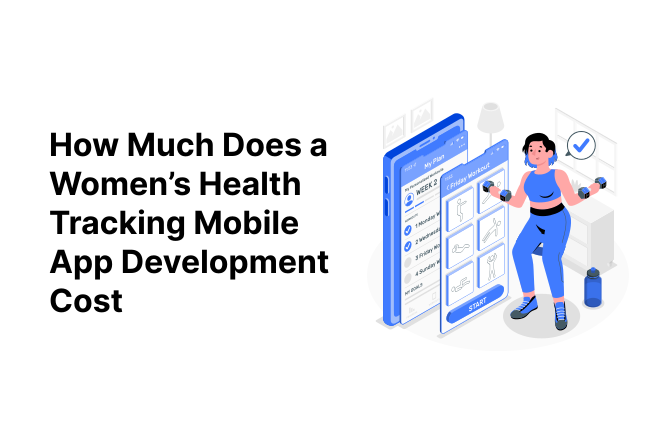
Building a women’s health tracking mobile app typically costs between $50,000 and $300,000, depending on the feature set, data security standards, and long-term scalability plans.
It’s not just about launching a mobile app; it’s about creating a product users trust with their most personal women’s health data.
The demand for women’s health mobile apps is growing at a remarkable pace. According to Statista, as of November 2025, a London-based period tracking app became the most downloaded app in this category worldwide, reaching nearly 50 million downloads.
This growth clearly reflects the mainstream and competitive nature of the FemTech space.
As a founder of Alphaklick, working closely with women’s wellness and FemTech startups, I’ve seen firsthand that women’s health mobile app development cost is influenced far more by thoughtful planning, privacy-first architecture, and future readiness than by feature count alone.
In fact, many founders underestimate how much the choice of development partner, whether it’s an offshore team or a Mobile App Development Company in New York, USA, can impact not only the initial build cost but also long-term scalability, compliance, and user trust.
This guide is all about breaking down the real costs involved, from MVP builds to advanced AI-driven platforms, so founders can make informed, confident decisions before investing in development.
Women’s health tracking mobile app development cost breakdown
This is the section where most founders slow down and start doing the math, and that’s a good thing.
From my experience building and advising FemTech products, the women’s health mobile app development cost becomes clear only when you look at the right cost layers, not just a single final number.
Let’s break it down logically.
Cost by platform (iOS, Android, Cross-Platform)
The platform you choose sets the foundation for your budget, development timeline, and long-term scalability. From my experience, this decision alone can noticeably shift the women’s health mobile app development cost, especially for products focused on period tracker mobile app development cost and ovulation tracker app pricing.
- iOS apps usually fall on the higher end of the budget due to Apple’s strict design guidelines, review processes, and testing standards. This results in a polished user experience but requires more development effort.
If iOS is your primary platform, this curated list of iOS Mobile App Development Companies in India (2026) can help you find experienced teams with healthcare app expertise.
- Android apps demand extensive testing across multiple devices and OS versions, increasing QA time and overall cost.
- Cross-platform mobile apps built with Flutter or React Native allow startups to launch faster using a shared codebase, making them a popular option for controlling early budgets.
For founders considering cross-platform development, explore our list of React Native Mobile App Development Companies in India (2026) to choose the right development partner.
Cost by platform comparison
| Platform | Estimated Cost Range | Key Impact |
| iOS App | $40,000 – $120,000 | Premium UX, higher testing effort |
| Android App | $45,000 – $130,000 | Broader device compatibility |
| Cross-Platform | $50,000 – $150,000 | Faster launch, optimized budget |
For many early-stage FemTech startups, cross-platform development keeps the cycle tracking mobile app cost breakdown more predictable while validating the app before investing in advanced features.
App complexity-based cost (basic, mid-level, advanced)
This is where cost differences become most noticeable. Two women’s health mobile apps may look similar on the surface, but the level of logic, personalization, and data processing behind the scenes can significantly change the women’s care app development cost.
Based on real projects I’ve worked on, complexity usually increases as the app moves from simple tracking to intelligent health insights. That shift directly impacts the women’s health mobile app MVP cost and overall budget.
App complexity cost breakdown
| App type | Estimated cost | Scope |
| Basic MVP | $50,000 – $80,000 | Cycle tracking, reminders, basic reports |
| Mid-level app | $80,000 – $150,000 | Fertility tracking, dashboards, integrations |
| Advanced app | $150,000 – $300,000+ | AI, compliance, wearables, scalability |
- A basic MVP focuses on core tracking and quick validation with minimal risk.
- A mid-level mobile app adds smarter fertility logic and integrations, increasing both value and development effort.
- An advanced mobile app includes AI, regulatory compliance, and wearable support, pushing the product into a more sophisticated category.
This is where basic vs advanced women’s health mobile app cost ($50K–$300K) fits realistically; mobile apps with AI, data science, and compliance naturally sit at the higher end of the range.
Development team structure & hourly cost breakdown
Your development team quietly controls both quality and cost. From my experience, an unbalanced team often leads to rework, delays, and a higher femtech startup mobile app development cost than founders initially expect.
For women’s care mobile apps, where accuracy, privacy, and trust matter, the right mix of skills is essential.
A well-structured team helps keep the women’s health mobile app development cost predictable while ensuring the product scales smoothly from MVP to advanced features.
A typical women’s health app development team includes:
- Product strategist to define scope, prioritize features, and align business goals
- UI/UX designer to create intuitive, trust-driven experiences
- Mobile app developers to build iOS, Android, or cross-platform functionality
- Backend engineers to manage data, APIs, and scalability
- QA & security specialists to ensure accuracy, privacy, and compliance
Average hourly cost breakdown
| Role | Hourly rate (India) | Hourly rate (US/UK) |
| Product strategist | $25 – $40 | $90 – $130 |
| UI/UX designer | $20 – $35 | $80 – $120 |
| Mobile developer | $25 – $45 | $100 – $150 |
| Backend engineer | $30 – $50 | $110 – $160 |
| QA & security | $20 – $40 | $90 – $140 |
Choosing the right team structure and region has a direct impact on women’s wellness mobile app development pricing. Many founders start with India-based teams to control early costs while maintaining quality.
Overall, a balanced team reduces unnecessary iterations, avoids technical debt, and helps keep the women’s care mobile app development cost under control throughout the product lifecycle.
If you’re looking to build a mobile app for your chiropractic clinic, this chiropractor app development guide explains features, cost, and process clearly.
Development cost in India vs other countries
Many global founders choose India not just for lower rates, but for strong technical depth and healthcare mobile app experience. With the right partner, women’s wellness mobile app development pricing in India delivers global-quality outcomes at optimized budgets.
Regional cost comparison
| Region | Avg Hourly Rate | Overall Cost Impact |
| India | $20 – $40/hr | Most cost-efficient |
| Eastern Europe | $40 – $70/hr | Moderate |
| USA / UK | $80 – $150/hr | Highest |
This regional difference alone can significantly reduce the total fertility tracker mobile app development cost without sacrificing quality.
If healthcare compliance and AI integration are critical, check out Best Healthcare Mobile App Developers in India 2026 for specialized development partners.
Other cost factors that significantly impact the budget
Beyond platforms and development teams, several less-visible factors can strongly influence the final women’s health mobile app development cost. In my experience, these are often underestimated during early planning, but they usually account for a large portion of the budget as the app scales.
Understanding these costs early helps founders avoid surprises later.
1. AI, machine learning & analytics
Advanced intelligence features are at the core of modern FemTech products. Capabilities such as predictive cycle tracking, fertility scoring, and personalized wellness insights define AI pregnancy tracker mobile app development.
These features increase the femtech mobile app development cost in 2026 due to:
- Data modeling and training
- Algorithm validation and tuning
- Continuous learning and optimization
Estimated cost impact:
- Basic AI features: $15,000 – $30,000
- Advanced AI & predictive models: $30,000 – $70,000+
While costly, AI significantly improves accuracy, engagement, and long-term product value.
If you’re planning advanced AI features, this detailed guide on AI mobile app development cost explains how machine learning models, data training, and analytics impact overall pricing.

2. Wearable & device integration
Adding wearable integration to women’s health mobile app features, such as Apple Watch, fitness trackers, or health sensors, adds both technical complexity and testing effort.
Costs increase due to:
- Device-specific APIs
- Real-time data syncing
- Cross-device testing and validation
Estimated cost impact:
- Single wearable integration: $10,000 – $20,000
- Multiple devices & platforms: $20,000 – $40,000+
Despite the added cost, wearable integration often boosts retention and user trust.
3. Backend infrastructure & scalability
As user numbers grow, backend costs rise steadily. A scalable women’s care app requires:
- Secure cloud hosting
- Encrypted health data storage
- Real-time data processing
- High-availability architecture
These elements are essential for serious FemTech products and directly affect women’s wellness mobile app development pricing.
Estimated cost impact:
- Initial infrastructure setup: $10,000 – $25,000
- Ongoing cloud & scalability costs: $2,000 – $6,000/month
4. Maintenance & ongoing support
Launching the app is only the beginning. Ongoing maintenance plays a major role in the long-term women’s health mobile app development cost.
Post-launch costs typically include:
- OS and device updates
- Feature improvements
- Security patches and audits
- Performance monitoring and bug fixes
Estimated cost impact:
- Annual maintenance: 15%–25% of initial development cost
- Monthly support (average): $1,500 – $4,000
Ignoring maintenance is one of the fastest ways to increase total cost over time, and one of the most common mistakes I see founders make.
Overall, these additional cost factors can add $40,000–$100,000+ to a woman’s health mobile app budget, depending on complexity. Planning for them early keeps your roadmap realistic and your women’s health mobile app development cost under control as the product grows.
For a broader market perspective, our guide on mobile app development cost in 2026 breaks down pricing trends across industries and platforms.
What is a women’s health tracking mobile app?
A woman’s health tracking mobile app is designed to help users understand and manage their health by tracking key biological and wellness indicators over time. These mobile apps transform daily inputs into actionable insights that support informed decisions related to fertility, pregnancy, and overall well-being.
Typically, a woman’s health mobile app allows users to track:
- Menstrual cycles and period patterns
- Ovulation and fertility windows
- Pregnancy milestones and weekly progress
- Hormonal health and wellness indicators
Whether you’re estimating a period tracker mobile app development cost or planning a broader FemTech ecosystem, defining the app’s purpose early helps avoid unnecessary development and keeps the overall women’s health mobile app development cost under control.
Popular types of women’s health & wellness apps
Women’s health mobile apps come in different categories, and each type has a direct impact on women’s wellness mobile app development pricing. The mobile app’s category determines complexity, data handling needs, and long-term scalability.
Common types include:
- Period and cycle tracking apps focused on menstrual history and predictions
- Ovulation and fertility tracking apps are designed to support conception planning
- Pregnancy and postpartum tracking apps offering stage-by-stage guidance
- Holistic wellness and hormone health platforms that combine lifestyle and health data
Each of these mobile app types follows a different cycle tracking mobile app cost breakdown, which becomes clearer when you evaluate platform choice, intelligence level, and scalability, covered in the cost sections ahead.
You can also explore our Wellness Mobile App Development: Cost and Features Breakdown Guide to understand how wellness-focused apps compare in scope and pricing.
How Alphaklick helps you build a cost-effective women’s health mobile app
At Alphaklick, we don’t start with features; we start with intent. As a mobile app development company in India, I work closely with founders to turn women’s health ideas into products that are accurate, secure, and financially sustainable.
Our focus is simple: build what truly matters and cut what doesn’t, so your women’s health mobile app development cost stays under control without limiting growth.
Here’s how we make that happen:
- Smart MVP planning that validates demand before heavy investment
- Clear, future-ready roadmaps aligned with femtech mobile app development cost 2026 trends
- Privacy-first, scalable architecture built for sensitive health data
- Proven experience in wearable integration and women’s health mobile app development
- Transparent guidance on period tracker mobile app development cost vs real long-term value
If you’re serious about building a women’s care app that lasts, not just launching one, let’s talk.
Book a free strategy call and walk away with clear answers, realistic costs, and a development plan you can trust.
Frequently asked questions
Question: What is the average women’s health app development cost?
Answer: The average women’s health mobile app development cost varies based on platform choice, feature complexity, data security requirements, and scalability. In most real-world cases, costs range from $50,000 for an MVP to $300,000+ for advanced AI-driven platforms with compliance and integrations.
Question: How much does a period tracker mobile app development cost?
Answer: A basic period tracker mobile app development cost is usually on the lower end, especially if it focuses on cycle tracking and reminders. However, adding fertility logic, analytics, or personalization increases cost, bringing it closer to mid-level women’s health mobile apps.
Question: Is AI pregnancy tracker app development expensive?
Answer: Yes, AI pregnancy tracker mobile app development requires a higher investment due to data modeling, algorithm training, and ongoing optimization. That said, AI improves prediction accuracy, user engagement, and retention, making it a strong long-term value driver rather than just an added expense.
Question: Does wearable integration increase women’s health app cost?
Answer: Yes, adding wearable integration to women’s health mobile app features increases development and testing complexity. However, wearable data significantly enhances real-time insights and user trust, often leading to higher engagement and better retention rates.