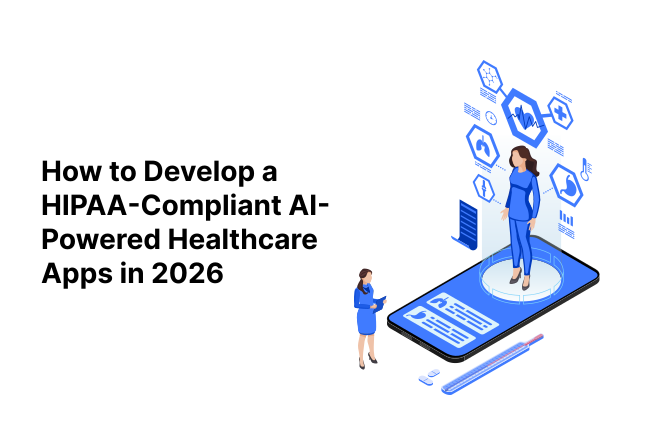
How to Develop a HIPAA-Compliant AI-Powered Healthcare Apps in 2026
Over the years, I’ve worked with many healthcare founders who want to build smarter digital health products.
Home » Healthcare Application
Our blog covers a wide range of information, including top technologies related to Saas, AI, mobile apps, wordpress, shopify, e-commerce, etc. to inspire and educate our readers. Through insightful articles, we aim to create a group of individuals who are eager to investigate the world around them.
Over the years, I’ve worked with many healthcare founders who want to build smarter digital health products.
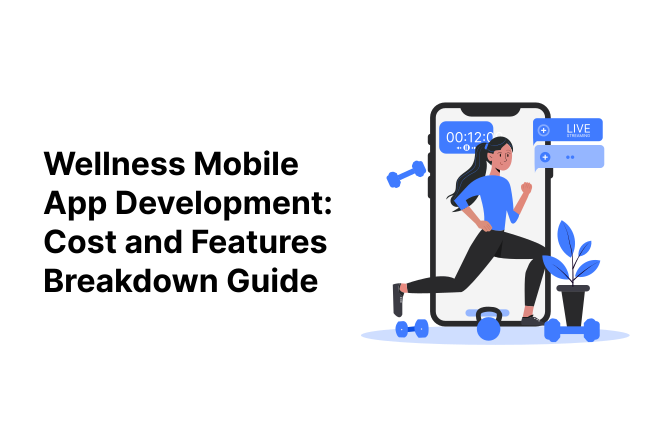
There’s a quiet revolution happening, not in gyms or clinics, but on our smartphones. From daily meditation to mood tracking, sleep tracking, and nutrition & hydration tracking, mobile apps are transforming the way people care for their minds and bodies.
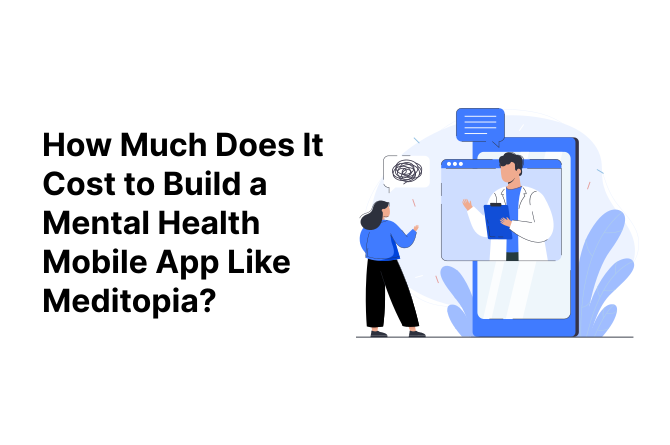
In 2026, the cost to build a mobile app like Meditopia typically ranges between $25,000 and $100,000, depending on the depth of features, personalization, and design experience.
From my experience leading multiple wellness and meditation mobile app projects, the cost to build a mental health mobile app like Calm typically ranges between $25,000 and $100,000.
In 2026, mental wellness has become more than just a personal goal; it’s now a global movement. Millions of people around the world are using digital solutions like Headspace and Calm to manage stress, improve sleep, and practice mindfulness every day.
In this Calm app development guide, I’ll walk you through how to build a meditation app like Calm, including key features, the right tech stack, and the proven steps my team has successfully used for clients.
The cost to build a mental health mobile app can start as low as $20,000 for a basic MVP and climb past $100,000 for a feature-rich, high-complexity solution.
The cost to build an AI-powered mental health mobile app in 2026 starts at roughly $40,000 for a basic version and can easily cross $200,000 for a full-scale solution packed with advanced AI features like emotion detection, predictive analytics, and therapy chatbots.

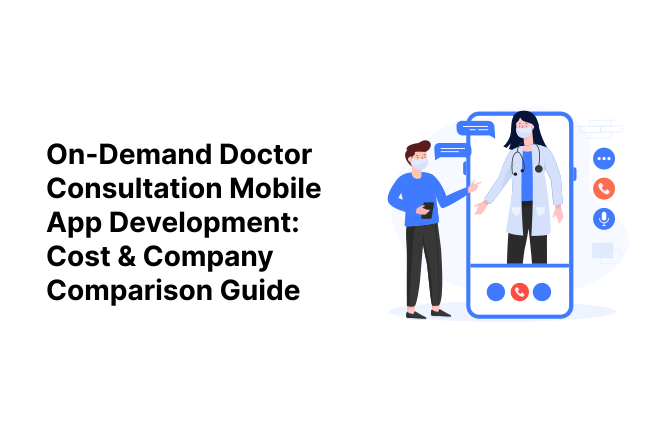
As the healthcare industry is undergoing a digital transformation, with mobile apps playing an important role in improving patient care, medicine delivery, and telehealth services.

Appointment with the medical practitioners mostly is a cumbersome process often consuming time and botheration of waiting in line with others for your number to come to enter inside the chamber of the doctor. The outbreak of COVID-19 has further made it more troublesome