In my experience, almost every business I work with wants the same thing: build faster, control costs, and deliver a smooth user experience across devices. That’s exactly why cross-platform app frameworks have become such a critical part of modern app development.
Instead of managing separate codebases for iOS, Android, and web, I’ve seen teams move to a single codebase approach and ship products much more efficiently.
Cross-platform development is no longer just about saving money. For me, it’s a strategic decision.
According to Statista, Flutter is the most popular cross-platform mobile framework among developers today, and that mirrors what I see on real projects.
In this cross-platform app development guide, I’ll share how these frameworks work and how I evaluate the right approach for building scalable mobile apps in 2026.
Understanding cross-platform app development
What does cross-platform app development mean?
Cross-platform app development means building applications that run smoothly across Android, iOS, web, and even desktop platforms using a single shared codebase. In my experience, this approach has completely changed how teams plan products, especially when speed and budget matter.
Unlike native development, where separate teams write separate code for each platform, modern cross-platform app frameworks allow developers to maintain one codebase while delivering consistent performance and design.
This is why many teams now consider cross-platform the best framework single codebase strategy for modern products rather than an alternative to native apps.
How cross-platform app frameworks work
Most cross-platform development tools work using one of the following technical approaches:
- Compiling code to native binaries (Flutter): Flutter compiles its code directly into native machine code, which is why it performs so well in real-world apps. What I’ve seen, it’s often chosen when performance and UI quality are top priorities. Discussions like Flutter vs react native usually start here.
- Bridging JavaScript to native APIs (React Native): React Native uses a bridge to connect JavaScript logic with native components. This approach enables faster development and code reuse, which is why the react native vs Flutter comparison remains one of the most common debates in cross-platform development.
- Rendering via web technologies (Ionic, PWAs): Frameworks like Ionic rely on web technologies and web views. Comparisons such as Ionic vs react native or progressive web apps vs native often highlight Ionic’s flexibility for web-first applications versus React Native’s closer-to-native performance.
Each of these approaches balances performance, flexibility, and development speed differently, making framework selection a strategic decision.
Key benefits of cross-platform app development
Across projects I’ve worked on, these benefits consistently stand out:
- Up to 40% faster development cycles, thanks to shared logic and UI
- Lower long-term maintenance costs, with fewer platform-specific updates
- Simpler feature releases, as updates roll out simultaneously across platforms
- Access to mature ecosystems, including Flutter, React Native, and other top cross-platform mobile frameworks
- Reusable design systems, supported by modern cross-platform UI frameworks
Because of these advantages, cross-platform development has become the foundation of many scalable products.
Whether it’s an MVP, SaaS platform, or enterprise app, a well-planned cross-platform app development guide often leads to faster growth and more predictable development outcomes.
If you are looking for AI mobile app development companies in India, choosing teams with expertise in both AI and mobile architecture can significantly impact cost and performance.
Top cross-platform app frameworks for modern development
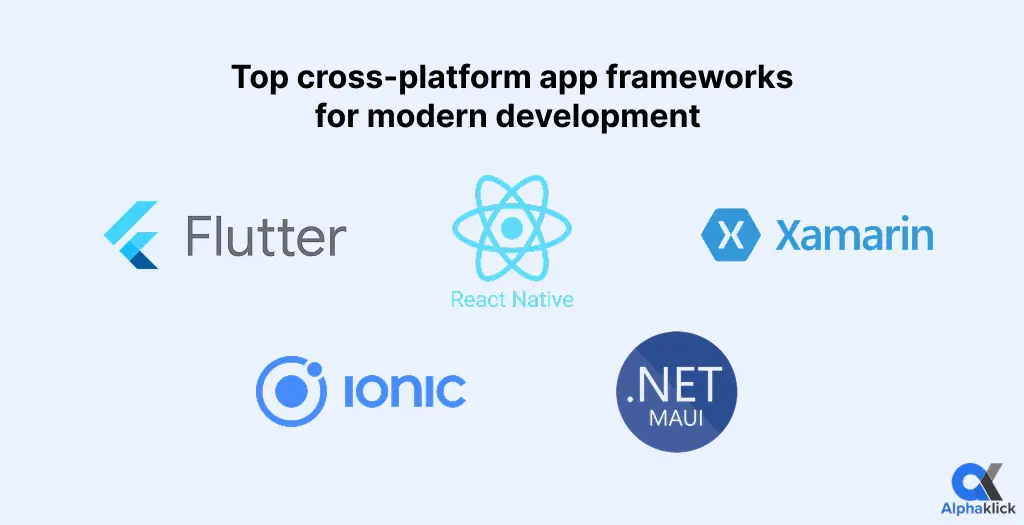
When choosing a framework, I always look beyond popularity and focus on performance, ecosystem maturity, and long-term scalability.
Below are the best cross-platform frameworks for 2026 that continue to dominate modern mobile app development and are widely adopted across startups and enterprises.
1. Flutter
Flutter is one of the most powerful cross-platform app frameworks available today. It uses the Dart language and renders its own UI engine, which gives developers full control over design and animations. From my experience, Flutter works exceptionally well for apps where UI consistency and performance are critical.
This is why many teams comparing Flutter vs react native often lean toward Flutter for design-heavy or animation-rich applications. Its growing plugin ecosystem and strong Google backing make it a reliable choice for long-term projects.
For businesses planning to build with Flutter, partnering with experienced Flutter app development companies in India can significantly reduce delivery risks.
2. React Native
React Native allows developers to build mobile apps using JavaScript and React, making it a favorite among teams with strong web development backgrounds. It remains one of the top cross-platform mobile frameworks due to its massive community, reusable components, and mature tooling.
In most react native vs Flutter comparison discussions, React Native stands out for flexibility and faster onboarding, while Flutter is often preferred for performance consistency. I’ve seen React Native work particularly well for MVPs and rapidly evolving products.
Teams choosing React Native often work with trusted React Native app development companies in India to ensure performance and scalability.
3. Xamarin
Xamarin is designed for developers who work within the Microsoft ecosystem and prefer C#. It enables code sharing across platforms while still accessing native APIs. In comparisons like Xamarin vs Flutter, Flutter usually leads in UI performance and modern tooling, but Xamarin remains relevant for enterprise teams already invested in .NET technologies.
4. Ionic
Ionic is a hybrid framework that relies on HTML, CSS, and JavaScript to build cross-platform applications. It’s commonly used for web-first products and internal business apps where speed of development matters more than raw performance.
When evaluating Ionic vs react native, React Native is typically favored for native-like performance, while Ionic excels in rapid prototyping and Progressive Web App support, especially in progressive web apps vs native use cases.
5. .NET MAUI
.NET MAUI is Microsoft’s modern evolution of Xamarin and aims to unify mobile and desktop development under a single framework. With the right .NET Maui tutorial, developers can build apps for Android, iOS, Windows, and macOS using a shared C# codebase.
From what I’ve seen, .NET MAUI is gaining traction among enterprise teams looking for a best framework single codebase solution within the Microsoft ecosystem, especially for long-term, scalable applications.
Comparison of popular cross-platform app frameworks
| Framework | Performance | Learning Curve | Best Use Case |
| Flutter | High | Medium | UI-heavy apps |
| React Native | Medium–High | Low | MVPs & scalable apps |
| Xamarin | Medium | Medium | .NET ecosystems |
| Ionic | Medium | Low | Web-first apps |
| .NET MAUI | Medium–High | Medium | Enterprise apps |
Cross-platform vs native app development
In my experience, choosing between cross-platform and native app development is less about trends and more about understanding what your product truly needs. Factors like performance expectations, budget, time-to-market, and future scalability play a major role in this decision.
With the rapid maturity of modern cross-platform app frameworks, the gap between cross-platform and native development has narrowed significantly.
Today, many business applications built using the top cross-platform mobile frameworks deliver performance and user experiences that are nearly indistinguishable from native apps.
Cross-platform vs native: key comparison
| Aspect | Cross-Platform App Development | Native App Development |
| Codebase | Single codebase across platforms | Separate codebase per platform |
| Development Speed | Faster launches | Slower due to parallel builds |
| Development Cost | Lower overall cost | Higher development investment |
| Performance | Near-native with modern frameworks | Maximum possible performance |
| UI Consistency | Highly using cross-platform UI frameworks | Platform-specific UI |
| Maintenance | Easier, centralized updates | Complex, platform-specific |
| Scalability | Ideal for most business apps | Best for platform-specific needs |
This comparison often forms the foundation of any practical cross-platform app development guide, especially for founders planning long-term growth.
Progressive web apps vs native
The debate around progressive web apps vs native highlights another important choice. Progressive Web Apps offer excellent reach, faster deployment, and lower costs because they run in browsers and work across devices. However, native apps still excel when deep hardware access, advanced offline capabilities, or complex animations are required.
From what I’ve seen, PWAs are a strong fit for content-heavy platforms and internal tools, while native or cross-platform apps perform better for transactional, feature-rich consumer applications.
When cross-platform makes sense
Cross-platform development is often the best approach when speed, efficiency, and scalability matter most:
- MVPs and startup products that require rapid validation and frequent updates
- SaaS platforms where consistent feature rollouts across devices are critical
- E-commerce and on-demand apps that need fast scaling without duplicating effort
- Budget-conscious enterprises aiming to reduce long-term development and maintenance costs
- AI-powered applications, including mobile apps with chatbots, recommendation engines, predictive analytics, or machine-learning APIs, where most intelligence lives in shared backend services and a single codebase simplifies AI feature deployment across platforms
Modern cross-platform development tools make it easier than ever to integrate AI capabilities, making cross-platform an ideal choice for intelligent, data-driven products.
Use cases best suited for cross-platform applications
Startups and MVP development
Startups benefit from cross-platform development by launching MVPs faster and at lower cost. With modern cross-platform app frameworks, teams can validate ideas across iOS and Android using a single codebase and iterate quickly.
Enterprise and saas applications
Enterprises use cross-platform development tools to maintain consistency across devices while reducing technical debt. For SaaS products with frequent updates, a shared codebase simplifies maintenance and improves release speed.
This approach is especially relevant for large-scale products, where enterprise mobile app development demands speed, scalability, and long-term stability.
E-commerce, fintech, and on-demand apps
These applications need scalability, fast updates, and a consistent user experience. Modern cross-platform UI frameworks make it easier to deliver reliable, high-performing apps across platforms without duplicating effort.
Choosing the right cross-platform framework
Business goals and budget considerations
From my experience, choosing among cross-platform app frameworks should always start with clear business goals and budget limits. If faster time-to-market is a priority, options like Flutter or React Native often provide the best framework single codebase advantage, helping teams launch across platforms while controlling development costs.
Many businesses exploring the best cross-platform frameworks in 2026 focus on how quickly they can scale without rewriting core features.
Performance, scalability, and security needs
Applications that process real-time data, AI insights, or financial transactions require careful evaluation of performance and security. When comparing options such as Flutter vs react native or reviewing a react native vs Flutter comparison, I usually look beyond benchmarks and focus on framework maturity, plugin reliability, and long-term support.
Modern cross-platform development tools can scale effectively, but architectural planning remains essential.
Developer skillsets and ecosystem support
Your team’s existing skills can significantly influence productivity. JavaScript-focused teams often feel comfortable with React Native, while C# developers may lean toward .NET MAUI after following a practical .NET MAUI tutorial. I also consider the strength of the ecosystem, community support, and available libraries, as these factors directly impact how well cross-platform UI frameworks perform over time.
Many businesses prefer working with a specialized Mobile App Development Company in Atlanta, USA to ensure faster time-to-market and reliable long-term support.
Cost of cross-platform app development
Using modern cross-platform app frameworks helps reduce overall development and maintenance costs by relying on a single codebase.
The final cost mainly depends on app complexity, features, and scalability requirements.
| App type | Estimated cost range |
| MVP app | $15,000 – $30,000 |
| Business app | $30,000 – $70,000 |
| Enterprise app | $70,000 – $150,000+ |
What influences cross-platform app development cost?
- Feature complexity (authentication, payments, AI features, real-time data)
- UI/UX requirements, especially when using advanced cross-platform UI frameworks
- Third-party integrations such as CRMs, analytics, or payment gateways
- Backend infrastructure and scalability needs
- Framework choice, as some of the top cross-platform mobile frameworks require more customization
For many businesses, following a structured cross-platform app development guide helps avoid unexpected costs and ensures better ROI over time.
If your app includes intelligent features like chatbots or analytics, understanding the AI mobile app development cost becomes essential during planning.
How AlphaKlick helps build scalable cross-platform apps
At AlphaKlick, I work closely with businesses to design, develop, and scale applications using proven cross-platform app frameworks that align with real business goals.
My focus is on building apps that launch faster, scale smoothly, and remain easy to maintain, while also supporting AI-based Flutter mobile app development when advanced intelligence or automation is required.
What we offer
- Framework consultation & architecture planning to identify the best framework single codebase strategy
- Flutter and React Native development tailored to your product roadmap
- Performance optimization & scalability planning to support growth and high traffic
- Ongoing maintenance and support to keep your app stable and future-ready
Book a free consultation and let’s create a scalable cross-platform app with a clear roadmap, smart architecture, and measurable results.
Frequently asked questions (FAQs)
Q1: Is cross-platform app development suitable for complex applications?
Answer: Yes. In my experience, modern cross-platform app frameworks can handle complex business logic, real-time data processing, integrations, and scalable architectures. With the right framework choice and backend design, cross-platform apps perform reliably even for enterprise-level and feature-rich applications.
Q2: Which cross-platform framework is best for long-term scalability?
Answer: Frameworks like Flutter and React Native are among the best cross-platform frameworks 2026 for long-term scalability. The right choice depends on your performance needs, UI complexity, and team expertise, but both frameworks are well-supported and future-ready.
Q3: How secure are cross-platform mobile applications?
Answer: Security depends more on implementation than the framework itself. When built correctly, cross-platform apps can be just as secure as native apps, especially when following best practices for encryption, authentication, and secure API handling.
Q4: Can cross-platform apps match native app performance?
Answer: For most business use cases, yes. Modern top cross-platform mobile frameworks deliver near-native performance, smooth UI interactions, and efficient resource usage. Native development is still preferred for high-performance gaming or AR/VR, but cross-platform apps are more than sufficient for most products.