
Swipe. Scan. Deliver. That’s the new normal for getting medicines in 2026. Behind this smooth user experience lies a robust mobile app, costing anywhere between $10,000 and $85,000+, depending on how smart, secure, and scalable you want it to be.
Modern users aren’t just ordering pills; they are expecting AI to remind them when to take it, consult a pharmacist through chat, and track deliveries in real time.
That’s why online pharmacy mobile app development has moved far beyond basic ordering systems.
Based on my 15+ years of experience and our team’s work on multiple pharmacy mobile apps and healthcare mobile apps, this blog reflects everything we have learned, from online pharmacy mobile app development cost in 2026 to must-have features and the best online pharmacy mobile app development companies in 2026.
What Is an Online Pharmacy Mobile App?
An online pharmacy mobile app is a digital platform that lets users browse, order, and manage medications via smartphones. These mobile apps serve multiple roles: patients can order prescriptions, pharmacists manage inventory, and admins oversee logistics and compliance.
From real-time prescription uploads to integrated insurance processing, pharmacy mobile app development company in India providers are making it easier than ever to build HIPAA-compliant, user-centric mobile platforms for medicine delivery.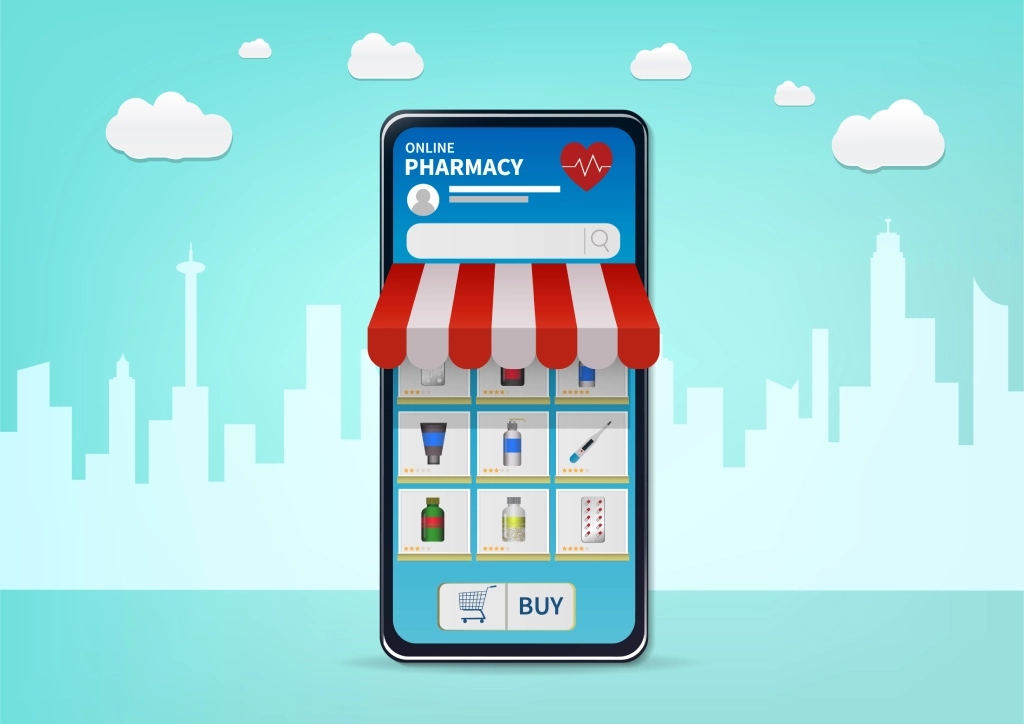
Online Pharmacy Mobile App Development Cost in 2026
The cost of developing an online pharmacy mobile app in 2026 depends largely on the app’s complexity, features, and integration level. Your investment can range from a basic MVP to a fully AI-powered telehealth solution from $15,000 to $150,000+.
Here’s a breakdown of estimated pharmacy delivery app costs based on app type and development phases:
Online Pharmacy Mobile App Development Cost by Complexity
| App Type | Key Features Included | Estimated Cost |
| Basic App (MVP) | Login, prescription upload, medicine list, basic cart, simple admin panel | $15,000 – $30,000 |
| Mid-Level App | Order tracking, smart search, payment gateway, reviews, refill reminders, pharmacist chat | $30,000 – $70,000 |
| Advanced App (AI, Telehealth) | AI recommendations, video consultations, e-prescriptions, inventory sync, Augmented Reality (AR) for medication instructions, Blockchain security, Voice commands, Smart medication reminders | $70,000 – $150,000+ |
Cost Breakdown Based on Development Stages
Before launching your pharmacy mobile app, it’s important to consider the full development lifecycle, not just the core features.
Below is a breakdown of additional pharmacy delivery app costs tied to different stages of mobile app creation and deployment.
| Development Stage | Estimated Cost |
| Backend and Frontend Development | $30,000 – $60,000 |
| Testing and Quality Assurance | $5,000 – $15,000 |
| Deployment and Launch | $2,000 – $10,000 |
| Ongoing Support and Maintenance | $5,000 – $20,000 annually |
| App Store Publishing (iOS/Android) | $99/year (iOS), $25 one-time (Android) |
| Legal & Compliance (HIPAA, GDPR) | $2,000 – $10,000+ |
| Marketing & App Promotion | $1,000 – $10,000+ (initial campaigns) |
Your budget will naturally depend on your goals and the agency you collaborate with, but this outline gives you a solid starting point. With the support of a reliable Mobile App Development in Jaipur, you can move confidently from planning to a fully functional medicine delivery app that’s secure, scalable, and user-friendly
Prioritize what matters most, then build from there.
If you are planning to build a mobile app like Healthmug but first want to understand how much it costs to develop a healthcare app like Healthmug, don’t miss our latest article, where we break down everything in detail.
Must-Have Features of an Online Pharmacy Mobile App in 2026
In 2026, pharmacy mobile apps are evolving from simple order portals to intelligent health platforms.
To stay competitive, your online pharmacy mobile app development strategy must include a solid foundation of essential pharmacy app features in 2026, along with smart innovations that users now expect.
Core Features for Every Pharmacy Mobile App
1. Easy Onboarding & Profile Setup: This feature offers fast sign-up using mobile, email, or biometrics, plus secure prescription upload. A smooth entry point builds user confidence from the start. It also reduces friction and boosts app retention.
2. Smart Search & Filtering: Allow users to search for drugs by brand, symptom, or condition with filters like “in stock” or “fast delivery.” An intelligent search experience means faster conversions. It helps users find what they need without frustration.
3. Prescription Upload & Management: Enable users to scan and upload doctor prescriptions and store them for future orders. Secure storage ensures privacy and compliance. It also simplifies refills and reorders.
4. Real-Time Order Tracking: Use GPS-enabled delivery updates to show users the status of their order in real time. This transparency builds trust and reduces delivery-related anxiety. Especially critical for time-sensitive medications.
5. Secure Payment Integration: Support for credit/debit cards, UPI, and wallets must be encrypted and compliant. One-click payment and wallet integration streamline the checkout process. It also increases trust and reduces cart abandonment.
6. Admin Panel & Regulatory Compliance: Provide admins with tools to manage inventory, orders, and promotions. Ensure your mobile app meets HIPAA, GDPR, and medical regulation standards. It safeguards user data while maintaining operational control.
Advanced Features for Pharmacy Mobile App
1. Telehealth & Video Consultation: Offer live consultations with doctors or pharmacists inside the app. This bridges the gap between diagnosis and medication. It also adds value for users in remote areas.
2. AR Medication Guidance: Use Augmented Reality to visually guide users on how and when to take medications. This improves accuracy and helps users follow complex instructions. A must-have for elderly users and caregivers.
3. Voice Commands for Accessibility: Enable voice navigation and search for hands-free control. Ideal for users with disabilities or limited tech experience. It boosts inclusivity and ease of use.
4. Drug Interaction Warnings: AI can detect potential drug conflicts based on uploaded prescriptions. Alerting users prevents health risks and adds a safety layer. It’s also a standout feature in AI-based pharmacy mobile app development.
5. Loyalty Programs & Personalized Discounts: Introduce points, tiers, and offers based on user history. Customise promotions, improve engagement, and keep users coming back. It also increases customer lifetime value.
6. Doctor & Pharmacy Locator: Allow users to search nearby healthcare providers or partner pharmacies. Filters for ratings, distance, and availability increase user convenience. Great for creating an online-offline pharmacy ecosystem.
7. Personalized User Experience: Use AI to suggest medicines, health tips, and bundles based on user behavior. Personalization boosts relevance and satisfaction. It helps your mobile app feel like a health assistant, not just a store.
With these core and advanced pharmacy app features in 2026, your pharmacy mobile app will meet both today’s standards and tomorrow’s expectations.
Curious how AI is shaping the entire healthcare app ecosystem? Read how AI is taking over healthcare mobile apps to explore real-world use cases and trends.
Monetization Strategies for Online Pharmacy Mobile Apps
A successful pharmacy mobile app isn’t just about features; it’s also about smart revenue generation.
Below is a table breaking down effective monetization strategies to help turn your mobile app into a profitable business.
| Strategy | Description |
| Order Commission | Charge pharmacy partners a fee for each successful transaction made via the app. |
| Premium Subscriptions | Offer users paid plans for benefits like faster delivery and exclusive discounts. |
| Sponsored Listings | Allow pharmaceutical brands to promote their products within search results. |
| Doctor Consultation Fee | Enable online consultations with doctors and collect payment through the app. |
These models make medicine delivery mobile app development not only sustainable but also scalable, turning your healthcare platform into a profitable digital business.
You can also explore our complete healthcare software development guide to understand how pharmacy apps fit into larger healthcare ecosystems such as hospitals, EHR systems, and telemedicine platforms.
If you’re looking to plan an app for appointment booking and patient care, this chiropractor app development guide is a helpful read.
How AlphaKlick Can Help Build Your Online Pharmacy Mobile App
We specialize in online pharmacy mobile app development for both startups and large-scale healthcare businesses, offering Healthcare Software Development Services, Pharmacy Management Software Development Services, and Telemedicine Software Development to build secure, scalable, and future-ready digital healthcare solutions.
From real-time tracking to AI-powered personalization, our team has helped clients cut development time by up to 30% while improving medication delivery accuracy and user satisfaction.
As a leading React Native mobile app development company in India, we combine mobile app speed, cross-platform performance, and cost-efficiency under one roof.
Book a free consultation with our mobile developer experts to explore development costs, must-have features, and how we can help you build a pharmacy app that stands out in 2026.
Frequently Asked Questions (FAQs)
Question: How to create an online pharmacy mobile app?
Answer: Start by defining your target audience, features, and tech stack. Hire a developer from the top mobile app development companies in India to build a compliant, scalable app with prescription upload, payment, and delivery modules.
Question: How much does it cost to develop a pharmacy mobile app?
Answer: The online pharmacy mobile app development cost in 2026 ranges from $10,000 for an MVP to $85,000 for an AI-integrated solution, depending on features, design, and platform.
Question: How Much Does It Cost to Develop a Healthcare Mobile App in India?
Answer: In India, healthcare mobile app development cost is around $7,200 – $30,000.
Question: How to set up an online pharmacy?
Answer: You will need to acquire pharmacy licenses, source inventory, partner with a tech team for medicine delivery mobile app development, and integrate features like order management, chat support, and real-time tracking.
Question: Can we sell medicine online?
Answer: Yes, but it requires licensing under local drug and pharmacy regulations. Your pharmacy mobile app development guide 2026 should include compliance frameworks like HIPAA, PCI-DSS, and NDPS.
Question: Where can I learn more about enterprise mobile app development?
Answer: If you want a deeper understanding of enterprise app architecture, scalability, and best practices, explore this detailed enterprise mobile app development guide: