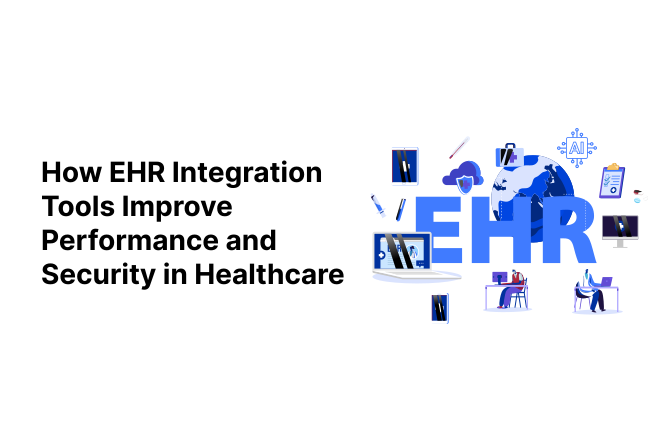
Healthcare today runs on multiple digital systems, from patient records and lab reports to billing and telehealth platforms. But in my experience working with healthcare businesses, many clinics struggle because these systems often operate separately. When data is scattered across different platforms, it becomes difficult for medical teams to access complete patient information quickly.
This is where EHR integration tools make a real difference. With proper EHR integration in healthcare, hospitals and healthcare platforms can connect their systems, streamline workflows, and give doctors instant access to accurate patient data.
According to Statista, the electronic health records market is expected to grow significantly and reach nearly 18 billion U.S. dollars by 2026, showing how rapidly organizations are adopting electronic health record integration.
In this guide, I’ll explain how healthcare businesses can improve performance and strengthen data security through healthcare system integration and EHR software integration, based on my experience working on healthcare platforms at Alphaklick.
What are EHR integration tools?
EHR integration tools are technologies that connect electronic health record systems with other healthcare platforms such as hospital management systems, telemedicine platforms, lab systems, and mobile health apps.
In simple terms, these tools allow different healthcare systems to communicate with each other. Through healthcare API integration, patient data can move automatically between applications instead of being entered manually in multiple systems.
With proper electronic health record integration, doctors and healthcare staff can access updated patient information in real time. This helps reduce errors, saves time, and ensures every department works with the same data.
Common capabilities of modern healthcare data integration tools
- Secure data exchange between healthcare systems
- Automatic synchronization of patient records
- Integration with telemedicine platforms and medical devices
- Data sharing between different EHR systems
By implementing advanced EHR interoperability solutions, healthcare organizations can keep patient data connected, accessible, and consistent across all healthcare technologies.
Why EHR integration is critical for modern healthcare
Healthcare organizations manage huge amounts of patient data every day, including medical history, lab reports, prescriptions, and billing records. When these systems don’t connect with each other, it often creates delays, duplicate records, and inefficient workflows.
This is why EHR integration in healthcare has become essential. By using EHR integration tools, hospitals and clinics can connect their systems and ensure patient data flows smoothly across departments.
With proper healthcare system integration, doctors can access accurate patient information faster, reduce errors, and improve overall care delivery.
How EHR integration improves healthcare operations
| Area | Impact |
| Patient care | Faster access to complete medical records |
| Operations | Less manual data entry and admin work |
| Data accuracy | Reduced duplicate or missing records |
| Digital health | Supports EHR integration for healthcare mobile apps |
Implementing strong EHR software integration helps healthcare organizations build more efficient and connected healthcare systems.
How EHR integration improves healthcare system performance
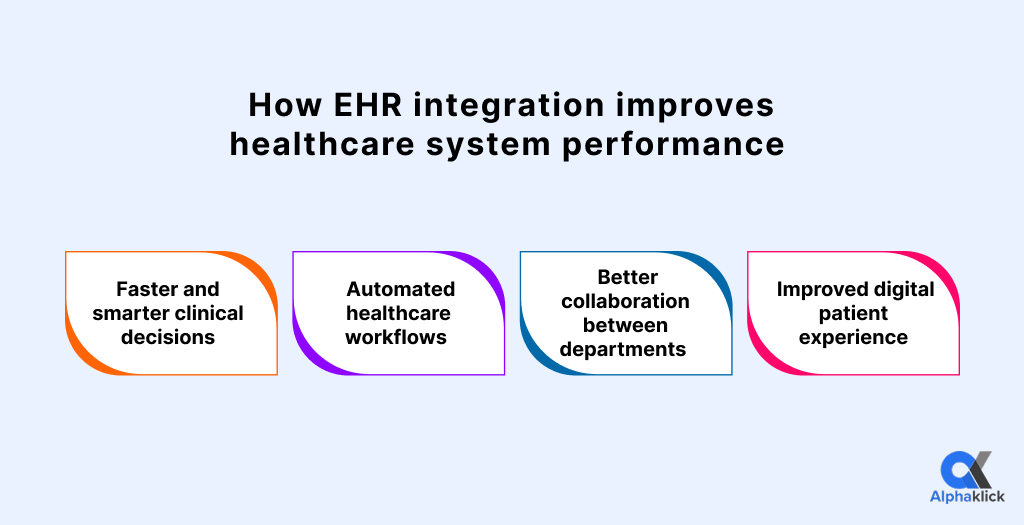
One of the biggest advantages of EHR integration tools is how they transform everyday healthcare operations. When hospitals connect their systems through EHR integration in healthcare, patient data flows automatically between platforms instead of being manually entered multiple times.
This not only reduces delays but also helps healthcare teams work smarter. Today, many healthcare platforms combine electronic health record integration with technologies like AI, machine learning, and workflow automation to make healthcare systems faster and more efficient.
1. Faster and smarter clinical decisions
Doctors rely on accurate patient information to make the right decisions. With EHR software integration, clinicians can instantly access patient history, allergies, prescriptions, and diagnostic reports.
When combined with AI and machine learning, healthcare systems can also analyze patient data, highlight risks, and support doctors in making faster clinical decisions, ultimately improving healthcare system performance with EHR.
2. Automated healthcare workflows
Modern hospitals are using healthcare API integration and workflow automation to simplify routine tasks such as patient registration, appointment scheduling, and lab report updates.
This automation reduces administrative workload and allows healthcare staff to focus more on patient care instead of manual processes.
3. Better collaboration between departments
Healthcare teams often depend on information from multiple departments. With advanced EHR interoperability solutions, labs, radiology departments, pharmacies, and doctors can share information instantly.
This connected ecosystem improves communication across medical teams and helps patients receive faster and more coordinated treatment.
4. Improved digital patient experience
Today’s healthcare platforms also support EHR integration for healthcare mobile apps, allowing patients to access their medical records, prescriptions, and appointment schedules directly from their phones.
With the addition of generative AI assistants and digital health tools, patients can also receive automated guidance, reminders, and support, creating a more transparent and convenient healthcare experience.
How EHR integration enhances security and data protection
Healthcare data is extremely sensitive, including patient records, medical history, and financial information. This makes healthcare systems a common target for cyber threats. By implementing secure EHR integration, hospitals and healthcare startups can protect patient data while keeping their systems connected.
Modern EHR integration tools combined with AI, machine learning, and workflow automation help healthcare platforms detect unusual activities, reduce the risk of data breaches, and maintain strong data integrity.
1. Reduced risk of breaches and better interoperability
With proper electronic health record integration, patient data moves securely between systems instead of being copied manually. Standards like HL7 and FHIR APIs enable secure and interoperable healthcare data exchange between platforms.
2. HIPAA-compliant data exchange
Healthcare systems must follow strict regulations. HIPAA-compliant EHR integration ensures encrypted communication and secure data transfer through reliable healthcare API integration frameworks.
3. Smart access control and monitoring
Advanced EHR interoperability solutions support strong security practices such as RBAC (Role-Based Access Control) and MFA (Multi-Factor Authentication).
In modern healthcare platforms, AI and generative AI can also monitor system activity and flag suspicious access patterns, helping protect sensitive patient information.
4. Securing healthcare mobile applications
As digital health platforms expand, EHR integration for healthcare mobile apps must prioritize EHR data security in healthcare apps. Secure APIs, authentication layers, and automated security workflows help ensure patient data stays protected across devices.
Healthcare platforms must follow strict data protection rules when handling patient records. Learn more about building HIPAA-compliant AI healthcare apps.
Technologies, tools, and platforms used for EHR integration
To enable smooth EHR integration in healthcare, hospitals and healthcare startups rely on several technologies that allow different systems to connect and share patient data securely.
These technologies support healthcare system integration, making it easier for platforms like hospital systems, lab software, telemedicine platforms, and mobile healthcare apps to communicate with each other.
Key technologies used in EHR integration
| Technology | Purpose in healthcare integration |
| HL7 | A widely used standard for exchanging healthcare data between systems |
| FHIR | A modern framework that enables fast and secure healthcare data sharing through APIs |
| REST APIs | Enables healthcare API integration between healthcare platforms |
| iPaaS (Integration Platform as a Service) | Cloud-based integration platforms that connect multiple healthcare applications easily |
| Artificial Intelligence (AI) & Machine Learning (ML) | Helps analyze healthcare data, automate workflows, and improve system efficiency |
| Cloud platforms | Provide secure storage and scalable infrastructure for healthcare applications |
| Integration middleware | Acts as a bridge to connect multiple healthcare systems |
These technologies help organizations implement reliable electronic health record integration and ensure healthcare systems remain connected and efficient.
Popular EHR integration platforms
Many healthcare organizations also use specialized platforms that provide ready-to-use healthcare data integration tools.
| Platform | Key integration capabilities |
| Epic | Enterprise-level EHR system used by large hospitals |
| Cerner | Focuses on healthcare interoperability and data sharing |
| Athenahealth | Cloud-based healthcare data management platform |
| Redox | API platform designed for healthcare system integrations |
| InterSystems HealthShare | Advanced interoperability platform for connected healthcare ecosystems |
These platforms simplify EHR software integration, improve interoperability, and help healthcare organizations build modern digital healthcare systems.
How to implement EHR integration in healthcare: practical steps
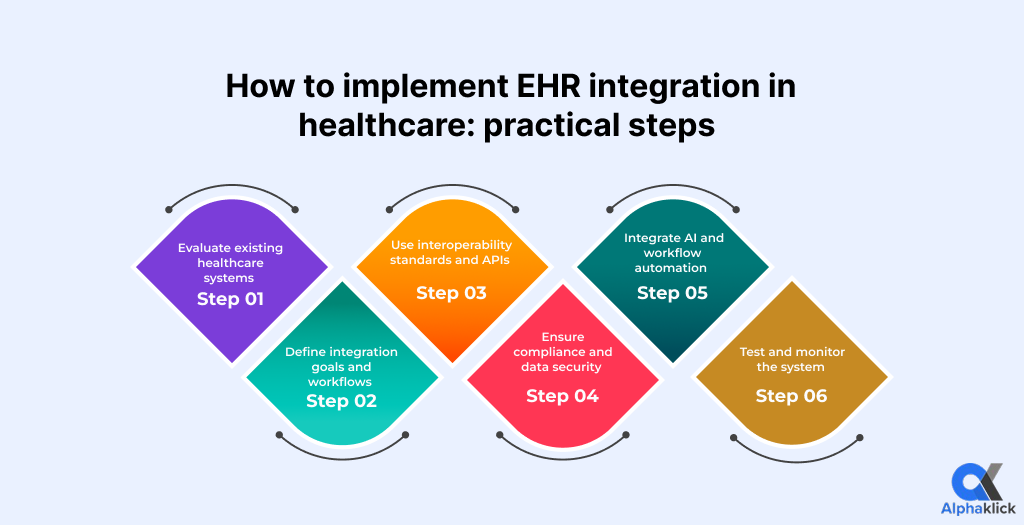
Implementing EHR integration in healthcare requires careful planning to ensure secure data exchange, system interoperability, and regulatory compliance. Healthcare organizations need a structured approach to connect their systems without disrupting operations.
1. Evaluate existing healthcare systems
Start by reviewing the current tools used in the organization, such as hospital systems, lab platforms, telemedicine software, and mobile apps. This helps identify where healthcare system integration is needed.
2. Define integration goals and workflows
Clearly define what the organization wants to achieve through electronic health record integration, such as faster access to patient data, automated workflows, or improved coordination between departments.
3. Use interoperability standards and APIs
Adopt standards like HL7 and FHIR APIs along with healthcare API integration to enable secure communication between healthcare systems.
4. Ensure compliance and data security
Healthcare platforms must implement HIPAA-compliant EHR integration, encrypted data transmission, and security measures such as RBAC and MFA to protect patient data.
5. Integrate AI and workflow automation
Modern healthcare systems use AI, machine learning, and workflow automation to automate processes like patient data processing, documentation, and alerts.
6. Test and monitor the system
Before full deployment, test data flow and interoperability between systems. Continuous monitoring ensures secure EHR integration and smooth healthcare operations.
Many modern healthcare platforms use AI and automation to improve efficiency. If you are planning such solutions, it’s helpful to understand the AI mobile app development cost in 2026.
How Alphaklick helps healthcare businesses build secure EHR-integrated applications
Healthcare businesses today need reliable platforms that support EHR integration for healthcare mobile apps while ensuring secure and compliant data exchange.
At Alphaklick, we help healthcare startups and enterprises build scalable applications with secure EHR software integration. Our team focuses on connecting healthcare systems, improving interoperability, and maintaining strong data protection standards.
Our expertise includes
- Implementing secure EHR integration frameworks
- Building platforms with healthcare API integration
- Ensuring HIPAA-compliant EHR integration
- Developing apps with strong EHR data security in healthcare apps
By using modern technologies and EHR interoperability solutions, we help healthcare organizations build secure and connected healthcare systems.
Book a free consultation with our team or reach out at info@alphaklick.com to discuss your healthcare app project.
FAQs
Q1. What is the EHR software used in healthcare?
Answer: EHR software is a digital system used by hospitals and clinics to store and manage patient medical records. It allows doctors to access medical history, prescriptions, and lab results easily while supporting electronic health record integration across healthcare systems.
Q2. What is the difference between EHR and EMR?
Answer: EMR is a digital patient record used within one hospital or clinic. EHR is designed for broader healthcare system integration, allowing patient data to be shared securely between multiple healthcare providers.
Q3. Why is EHR integration important for healthcare systems?
Answer: EHR integration in healthcare connects different systems so patient data can move smoothly between departments, improving coordination and reducing manual data entry.
Q4. How does EHR integration improve healthcare performance?
Answer: Using EHR integration tools helps automate workflows, reduce administrative tasks, and give doctors faster access to patient records, improving overall healthcare efficiency.