The client was operating a multi-specialty hospital where key functions, patient management, billing, diagnostics, and inventory were handled through disconnected systems and manual processes. As operations scaled, this led to delays, data inconsistencies, and limited visibility across departments.
Teams across OPD, IPD, pharmacy, and diagnostics were working in silos, making coordination inefficient and slowing down critical decision-making.
To address this, our healthcare software development team built a custom hospital management system that centralizes all operations into a single platform. The solution connects departments, automates workflows, and provides real-time access to data, enabling faster and more accurate healthcare operations.
Let’s understand in detail the key challenges faced by the client and how our solution addressed them.
Client Challenges
The client was dealing with multiple operational inefficiencies and system-level gaps due to the absence of a centralized healthcare management platform. These challenges were becoming more prominent as patient volume and departmental dependencies increased.
Key issues identified:
- Fragmented systems with no unified database, leading to data duplication and inconsistencies
- Manual appointment scheduling and patient registration, increasing wait times, and administrative load
- Delays in OPD and IPD workflows due to a lack of process automation
- Billing discrepancies and limited visibility into financial transactions and reports
- No real-time tracking of pharmacy stock, resulting in stockouts and overstocking
- Inefficient handling of pathology and radiology reports, causing delays in diagnostics
- Poor coordination in ambulance dispatch and emergency response management
- Inventory mismanagement across departments with no centralized monitoring
- Limited reporting and analytics make it difficult for management to make data-driven decisions
These operational gaps were directly impacting hospital efficiency, staff productivity, and overall patient experience, highlighting the need for a scalable and integrated hospital management solution.
Our Approach & Solution
As part of our hospital management system development services, our team began with a comprehensive analysis of the client’s existing workflows, departmental dependencies, and system gaps. We mapped each process across OPD, IPD, billing, pharmacy, diagnostics, and administration to identify inefficiencies and integration requirements.
Based on this, our development team designed a modular, API-driven hospital management system that centralizes operations while allowing flexibility for future scalability and integrations.
We implemented:
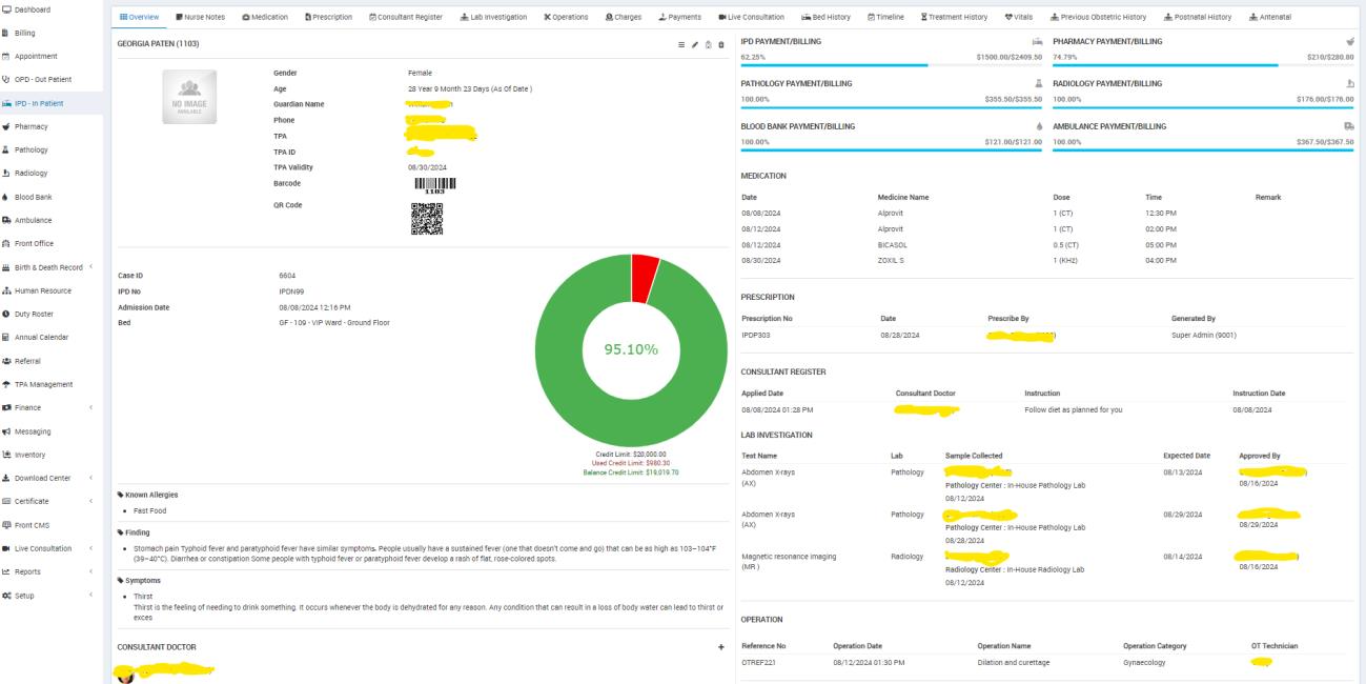
- Centralized Data Architecture to unify patient records, billing data, diagnostics, and inventory into a single source of truth
- Role-Based Access Control (RBAC) to ensure secure, permission-based system access across all user roles
- Automated Workflows for appointment scheduling, patient registration, billing processes, and diagnostic reporting to reduce manual intervention
- Real-Time Dashboards for monitoring hospital operations, financial performance, and resource utilization
- Interconnected Modules enabling seamless data flow between departments such as pharmacy, pathology, radiology, and administration
Our development team focused on building a system that is not only functionally robust but also technically scalable. The platform was engineered with high performance, secure architecture, and integration readiness, allowing the hospital to expand its operations without system limitations.
This approach ensured a smooth transition from fragmented processes to a fully integrated digital healthcare ecosystem.
We have also delivered similar solutions for specialized clinics like AVI Dental, focusing on streamlined appointment management, patient records, and billing systems.
User Roles & Access Architecture
We designed a multi-role system architecture to ensure controlled access and operational clarity.
Each user interacts with the system based on defined permissions:
- Super Admin manages system configuration, permissions, and global reporting
- Admin handles day-to-day hospital operations and monitoring
- Doctors manage OPD, IPD, and OT workflows, including patient records and treatments

- Accountants handle billing, invoices, and payroll
- Pathologists and radiologists manage diagnostics and report generation
- Receptionists handle appointments, visitors, and complaints
- Patients can book appointments and track treatments
- Pharmacists manage medicine stock, sales, and purchase records
This structure ensures data security, accountability, and efficient workflow execution.
Core Modules & System Functionality
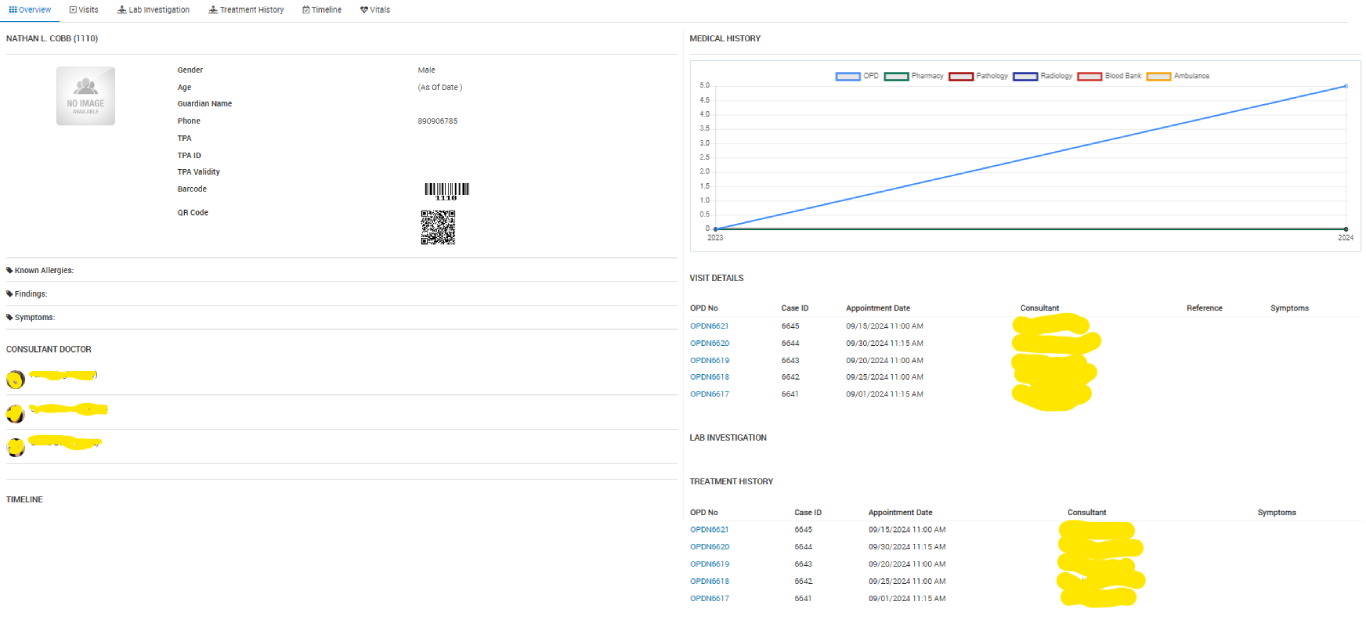
Our development team implemented multiple interconnected modules to handle complete hospital operations:
| Module | Technical Functionality |
| OPD/IPD Management | End-to-end patient lifecycle management from registration to discharge |
| Appointment System | Real-time scheduling engine with doctor availability tracking |
| Billing System | Automated invoicing, payment tracking, and financial reporting |
| Pharmacy Management | Stock tracking, batch management, expiry alerts |
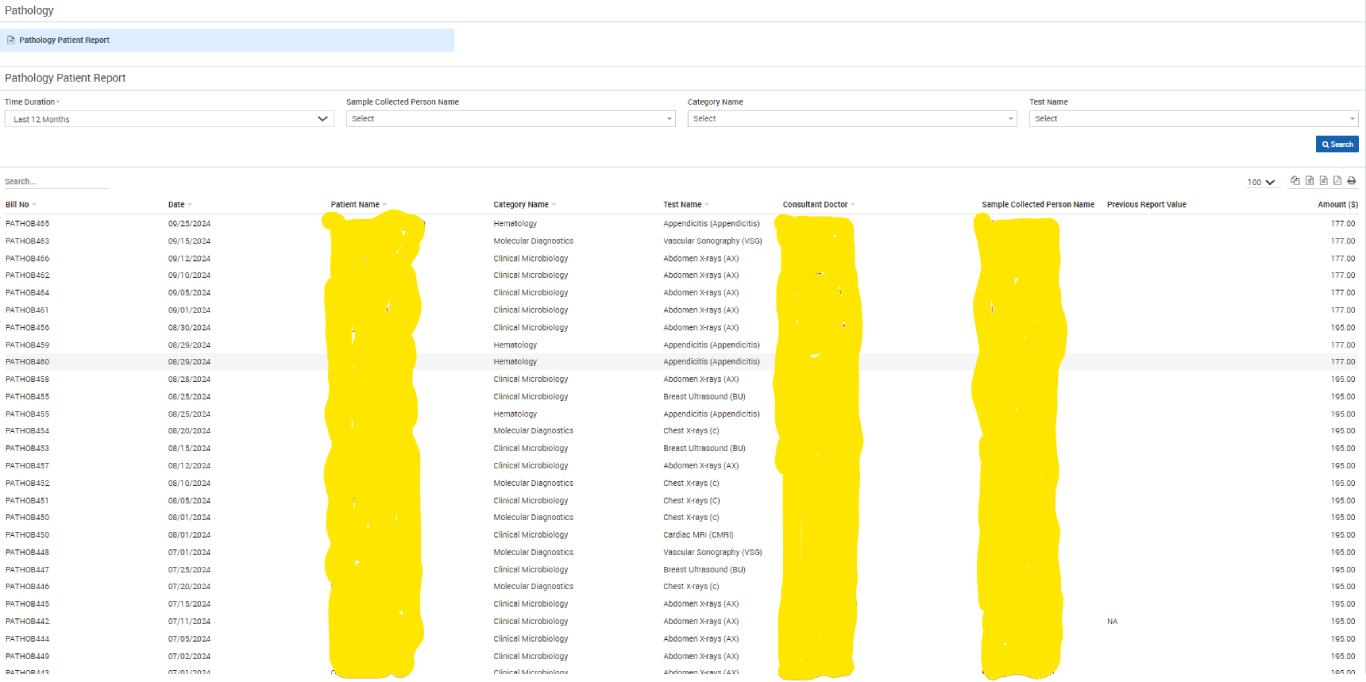
| Pathology Module | Lab test workflow and report management |
| Radiology Module | Imaging data processing and report generation |
| Blood Bank | Donor records and blood inventory tracking |
| Ambulance Management | Emergency request handling and dispatch tracking |
| Inventory Management | Asset and supply monitoring across departments |
Technology Stack & Development Architecture
Our development team used a modern, scalable, and secure technology stack to build the system:
Backend Development
- Node.js for scalable server-side processing
- Express.js for API architecture and routing
Frontend Development
- React.js for dynamic and responsive UI
- HTML5, CSS3, JavaScript for structured interface development
Database
- MongoDB for flexible data storage and scalability
- MySQL for structured transactional data
Cloud & Infrastructure
- AWS (Amazon Web Services) for cloud deployment
- AWS EC2 for server hosting
- AWS S3 for secure document and report storage
Security Implementation
- JWT-based authentication for secure login
- Role-Based Access Control (RBAC)
- Data encryption (at rest and in transit)
Integrations
- Payment gateway integration for billing
- SMS and email APIs for notifications
- Diagnostic and lab integrations were required
Development Process Followed
Our development team followed a structured, agile-driven lifecycle to ensure smooth execution, system scalability, and performance.
1. Requirement Gathering & Workflow Mapping
We collaborated with stakeholders to understand existing workflows across OPD, IPD, billing, pharmacy, and diagnostics. This helped us identify process gaps and define clear functional and technical requirements.
2. System Architecture & Database Design
Our team designed a modular and scalable architecture, along with optimized database structures to ensure secure data handling, consistency, and high availability.
3. UI/UX Design & Prototyping
We created wireframes and prototypes to map user journeys and ensure an intuitive, role-based interface for all system users.
4. Module-wise Development & API Integration
The platform was developed in modules, supported by RESTful APIs for seamless communication between frontend, backend, and third-party integrations.
5. Testing (Functional, Performance & Security)
We conducted comprehensive testing to validate system functionality, optimize performance under load, and ensure secure access through authentication and role-based controls.
6. Deployment & Ongoing Support
The system was deployed on a cloud environment with monitoring in place. Our team continues to provide support, updates, and performance optimization post-deployment.
Results & Impact
Post-deployment, the hospital achieved significant operational improvements and system efficiency gains:
- 40–50% reduction in manual administrative workload through workflow automation
- Faster patient registration and appointment handling with reduced wait times
- Improved billing accuracy with better financial tracking and transparency
- Real-time visibility into operations across departments via centralized dashboards
- Enhanced coordination between pharmacy, diagnostics, and administrative teams
- Reduced inventory losses with automated stock monitoring and alerts
- Improved patient experience with quicker service delivery and streamlined processes
Beyond workflow automation, hospitals are increasingly adopting AI healthcare agents to enhance patient engagement, reduce staff workload, and support real-time operational efficiency.
Conclusion
Our hospital management system enabled the client to transition from fragmented operations to a fully integrated, data-driven healthcare environment. The solution improved operational efficiency, reduced errors, and provided real-time insights for faster and more informed decision-making.
If you’re planning to build a custom hospital management system or any healthcare software solution, our team can help you design and develop a scalable, secure, and performance-driven platform tailored to your needs.
Book a free consultation with our experts to discuss your healthcare software requirements.